
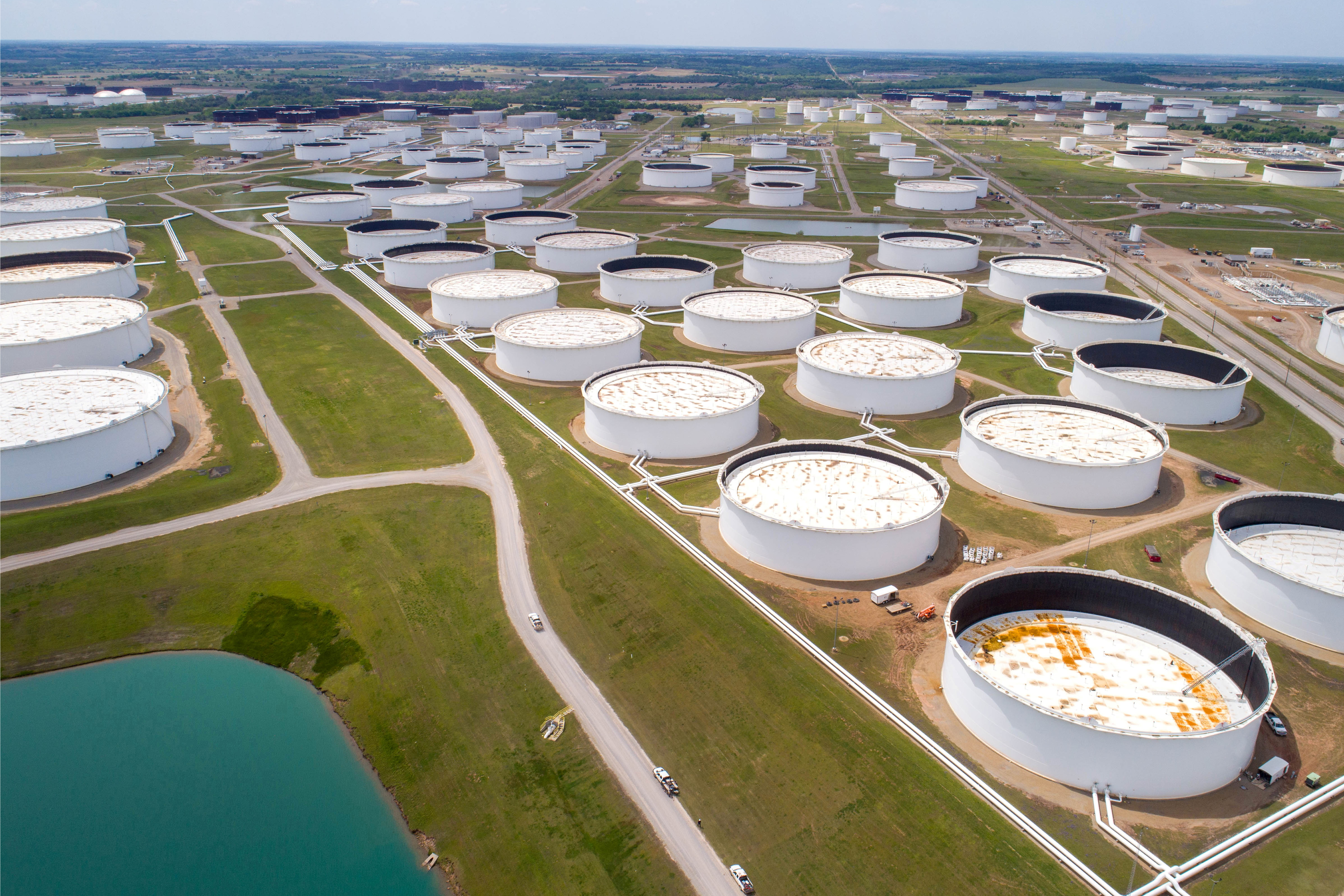
Senkel Terminal LLC is one of the world's largest independent operators of tank terminals for oils, gases, and chemicals, with extensive experience in tank storage logistics. The company boasts a total storage capacity of 20 million cubic meters across Europe, North America, South America, and the Asia-Pacific region, managing 15 terminals in Houston and the Netherlands. At these facilities, Senkel Terminal LLC stores and handles nearly 1,000 different products, including crude oil, petroleum derivatives, biofuels, gases, and chemicals. In 2018, the terminals processed nearly 153 million tons of cargo. With a strong customer focus, Senkel Terminal LLC offers customized infrastructure solutions, emphasizing safety, efficiency, and reliability in the construction and operation of its facilities.
All port locations
Senkel Terminal LLC operates one of the largest strategically located terminals in the USA, in the Rotterdam port area, and in other key oil and gas regions. Our Oil Terminal primarily focuses on the import and export of crude oil, as well as transshipment and storage of various petroleum products such as Gasoil, Motor Gasoline, and Aviation Fuel. Equipped with the latest technology for loading, unloading, and storage, the terminal benefits from excellent deep seaway access without the need for locks. It is well-connected to inland regions through waterways, rail networks, and motorways. All of our locations offer potential for future expansion. This has established our terminal as a state-of-the-art facility for the storage and distribution of petrochemicals.
- Port of Houston: The leading port in the US for crude oil exports and the second-largest for container imports. It is also the top importer of foreign steel in the country.
- Port of New York and New Jersey: The largest port in the US for oil imports and the third-largest port overall for cargo and container ships.
- Port of Long Beach: One of the largest ports in the US, situated near numerous offshore oil rigs. It is a key hub for importing and exporting goods.
- Port of Seattle: A deep-water port capable of accommodating large cargo vessels, known for its specialized equipment for transferring grain from trucks to silos and cargo ships.
- Port of Los Angeles: Located in California's San Pedro Bay, it handles the majority of Transpacific trade.
- Port of Savannah: Home to the largest single-terminal container facility in the United States.
- Port of Cleveland: A Foreign Trade Zone where companies can utilize special customs procedures.
- Port of Charleston: Engages in trade with Japan, China, Europe, and India, primarily exporting paper, wood pulp, and auto parts.
- Port of Miami: The only southeastern port capable of accommodating Neo-Panamax vessels.
- Port of Rotterdam: A worldwide leader in liquid bulk commodities, including crude oil, petrol, diesel, and biofuels. Rotterdam features five refineries that convert oil into fuels and other derivatives.
- Port of Amsterdam: A key logistics hub for oil, specializing in blending and storing oil products such as fuels.
- Delfzijl: An industrial port responsible for approximately 15% of the Netherlands' chemical manufacturing.
- Jurong Port: The Universal Terminal is Singapore's largest independent petroleum storage facility and ranks among the largest commercial storage sites globally.
- Fujairah: The largest port on the eastern coast of the United Arab Emirates and the second-largest bunkering hub worldwide. Port of Fujairah.
- Port of Ningbo-Zhoushan: Located in Zhejiang Province, this port is the world's busiest for cargo tonnage and serves as China's primary transit hub for crude oil and iron ore.
- Port of Qingdao: Situated in Shandong Province, this port specializes in reefer cargo and international transshipment activities.